|
The year 2024 has been a landmark for the high-tech community. The High Tech Systems Center (HTSC) has officially launched, bringing with it a fresh mission, vision, and a dynamic and bottom-up approach to collaboration. With its new management team, HTSC is focuses on fostering strategic partnerships, building a strong, community-driven identity, and driving innovation.
HTSC is an independent entity, uniting the departments of Mathematics and Computer Science (M&CS), Mechanical Engineering (ME), Applied Physics and Science Education (APSE), and Electrical Engineering (EE), and the AI research institute (EAISI) with the ecosystem of high-tech industries. Together they form a powerhouse of over 20 research teams and 400 researchers at TU/e, together with industrial research fellows forming the linking pin to empower high-tech industries with technologies and methodologies to enhance performance and boost labor productivity.
A key focus area for HTSC is semiconductor technology, which has gained renewed global interest this year. HTSC is playing a pivotal role in initiatives like TU/e’s Future Chips Flagship and the Dutch government's Beethoven project aimed at boosting talent creation in semiconductor manufacturing. Additionally, HTSC has been instrumental in securing TU/e’s largest-ever agreement with ASML, valued at over €180 million, underscoring its growing influence in the high-tech sector.
Despite being in its early stages, HTSC has quickly gained momentum, organizing significant events like a winter school with South Korea on semiconductors, a symposium with VDL-ETG on contamination control, and contributing to a €6 million research collaboration through HTSM-TKI funding. HTSC is also coordinating the strategic partnership between TU/e and ASML for the next decade, solidifying its position as a central force in the high-tech ecosystem. The center is rapidly becoming a driving force behind impactful research that promises to transform industries and society.
In this edition: |
|
|
|
|
|
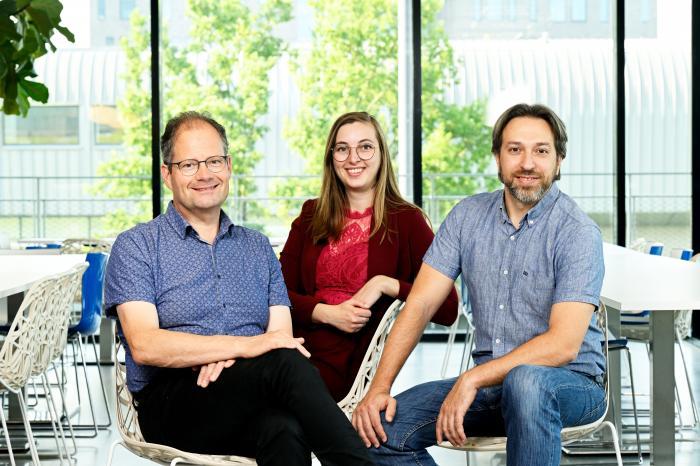
Lars Janssen defended his PhD on "Transforming complex engineering with a modular framework" Cum Laude. "Modular approaches are essential to break up the huge challenges engineers face into smaller, tangible challenges. This thesis helps engineers to create the reliable systems required for a sustainable future." Please join us in congratulating Lars! |
|
|
|
|
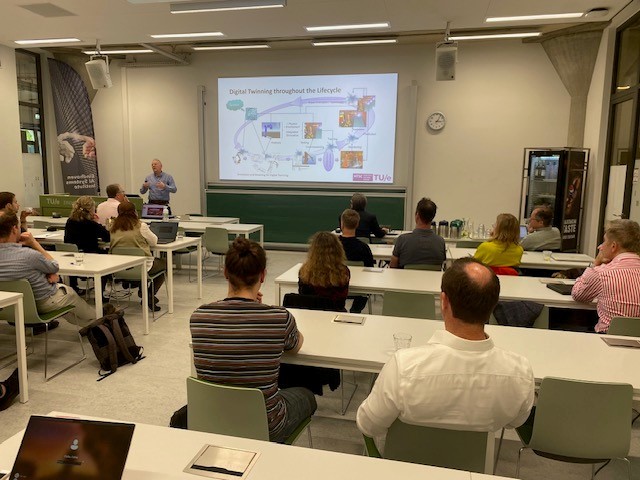
Earlier this year, on May 23, 2024, the Research Meet on Digital Twinning organized by Marc Hamilton was a success.
The most recent edition, which took place on September 5, 2024 discussed Synthesis Based Engineering (SBE). Again, it was very successful and many visions were shared. Three projects at Rijkswaterstaat were presented by EngD trainees Farah Fadel, Luka Gradinac, and Atefeh Dehghannayyeri. Two experts from TNO-ESI and ASML, Dennis Hendriks and Ivo ter Horst/Nontas Rontogiannis, contrasted the prior presentations with their view from high tech industry.
Stay tuned for upcoming Research Meets! |
|
|
|
|
Researcher in the Spotlight |
|
|
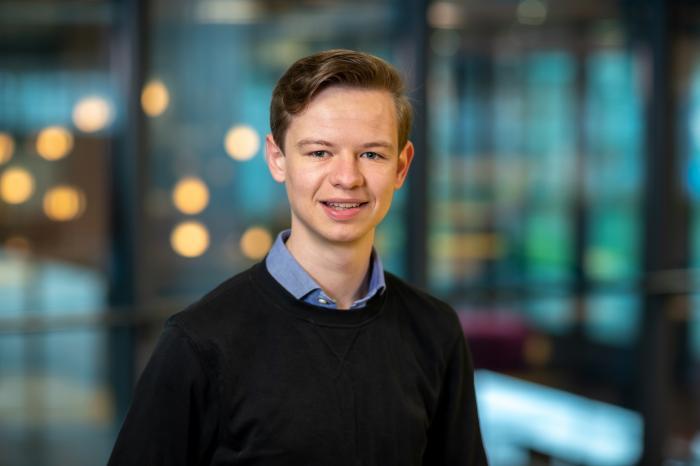
This edition we shine a light on Maurice Poot. During his PhD, Maurice developed learning-based control methods to enhance semiconductor manufacturing machines. Funded by ASMPT, his research focused on improving machine accuracy and throughput for advanced chip production. Maurice integrated machine learning techniques to solve real-world challenges, significantly advancing industrial-scale technology. Read more from Maurice's perspective on his impactful work! |
|
|
|
|
The ArrowHead Tools project, coordinated by Luleå University of Technology, advanced digitalization with 82 partners, including TU/e's Mathematics & Computer Science, Electrical Engineering, and Mechanical Engineering departments. Achievements include an open-source IoT platform, cost-effective engineering tools, and reduced automation costs, setting a benchmark for Industry 4.0. Read more here, or check the ArrowHead Tools website here.
|
|
Marc Geilen (Electronic Systems) researches the automation of model-driven design processes for high-tech systems: “We want to bring design automation to the practice of high-tech systems”. Read more in Dutch (High-Tech Systems magazine), or in English (Bits&Chips).
Lars Janssen, Rob Fey and Nathan van de Wouw present a model-based, modular redesign framework for mechatronic systems, in Mikroniek.
Jan-Jaap Koning represented TU/e during the euspen SIG Meeting on Thermal Issues earlier this year. Read about it in Mikroniek Digital (only for members of DSPE).
|
|
|
|
|
Each edition we will have people from within HTSC share their perspective. This time it is the turn of: Idoia Cortes and Nathan van de Wouw.
Their interview is published here. |
|
The Electronic Systems (ES) group is looking for an Assistant Professor of Model-Driven Design of Embedded and Cyber-Physical Systems. If you are looking for this opportunity, click the link for a detailed job description and requirements. |
|
|
|
|
| Date | Event | Organizer | Location | 8-9 Oct | Systems Workforce Summit | TU Delft, NXTGEN Hightech | Delft | 10 Oct 2024 | Bits&Chips Event | Bits&Chips | Van der Valk Eindhoven-Best | 28-29 Oct 2024 | Int. MicroNano Conference | MinacNed | Eindhoven | 12-13 Nov 2024 | SIG Meeting: Precision Motion Systems & Control | Euspen | Brabanthallen, 's-Hertogenbosch | 13-14 Nov 2024 | Precision Fair | Mikrocentrum | Brabanthallen, 's-Hertogenbosch | 16 Dec 2024 | HTSC Mini-symposium: Complexity & System Engineering | TU/e HTSC | Eindhoven |
|
|
|
|
Contact
High Tech Systems Center TU/e campus Flux 0.111 Groene Loper 19 5612 AP Eindhoven |
| |
Colophon
HTSC Newsletter is a digital newsletter of Eindhoven University of Technology (TU/e). TU/e sends this newsletter to internal and external HTSC relations. |
|
|
|